Description
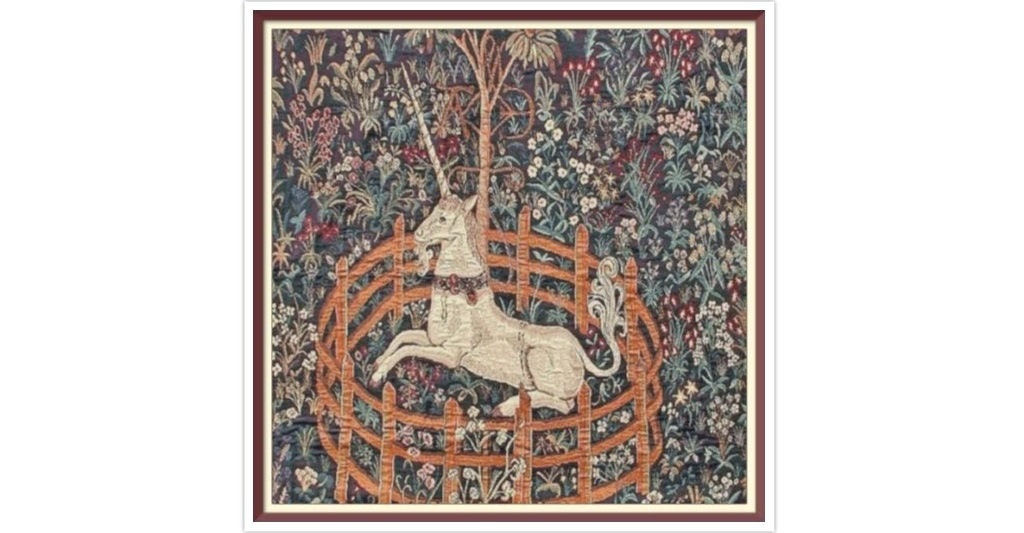
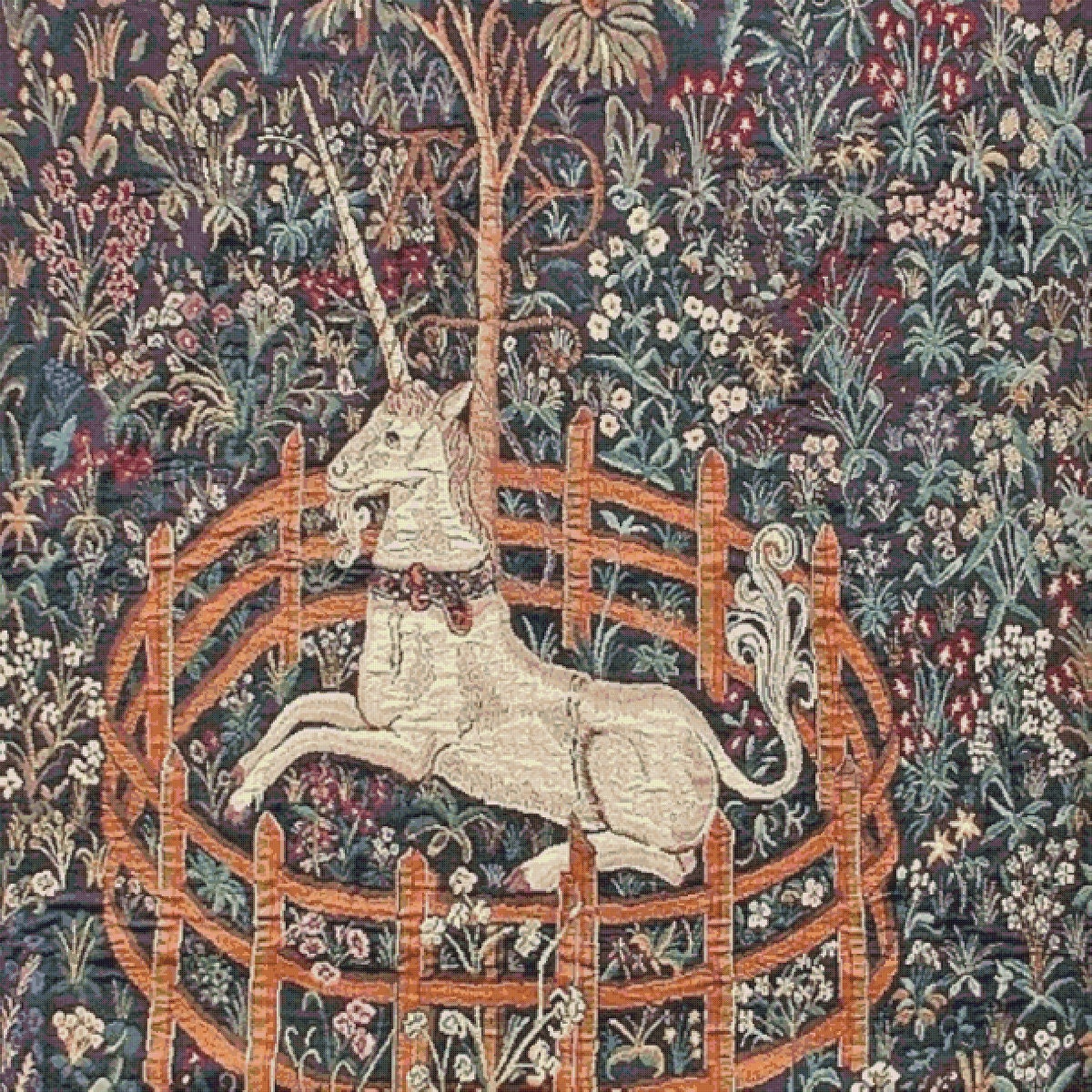
PDF Counted Vintage Cross Stitch Pattern – The Unicorn is in Captivity and is no Longer Dead – 15th Century – Full Cross Stitches
PDF Counted Vintage Cross Stitch Pattern #555-10
The Unicorn is in Captivity and is no Longer Dead
15th Century
You will be able to create realistic details with a needle in the style of painting.
Adapted from works of art.
The patterns contain only full cross stitches.
You can choose from four sizes. Please specify in the personalization what size you want to get.
You can use the pattern on any canvas, calculations are attached for 14, 18, 22.
You can see the type of embroidery on the presented photo.
Size: 387w x 387h stitches
Colors: 100 DMC
Expected finished size –
14 Count – 70w cm x 70h cm ~ 27,5w in x 27,5h in
18 Count – 54,6w cm x 54,6h cm ~ 21,5w in x 21,5h in
22 Count – 44,7w cm x 44,7h cm ~ 17,6w in x 17,6h in
Size: 497w x 497h stitches
Colors: 100 DMC
Expected finished size –
14 Count – 90w cm x 90h cm ~ 35,4w in x 35,4h in
18 Count – 70,1w cm x 70,1h cm ~ 27,6w in x 27,6h in
22 Count – 57,4w cm x 57,4h cm ~ 22,6w in x 22,6h in
Size: 608w x 608h stitches
Colors: 100 DMC
Expected finished size –
14 Count – 110w cm x 110h cm ~ 43,3w in x 43,3h in
18 Count – 85,8w cm x 85,8h cm ~ 33,7w in x 33,7h in
22 Count – 70,2w cm x 70,2h cm ~ 27,6w in x 27,6h in
Size: 718w x 718h stitches
Colors: 100 DMC
Expected finished size –
14 Count – 130w cm x 130h cm ~ 51,1w in x 51,1h in
18 Count – 101,3w cm x 101,3h cm ~ 39,8w in x 39,8h in
22 Count – 82,9w cm x 82,9h cm ~ 32,6w in x 32,6h in
The patterns contain full cross stitches.
These design dimensions do not include margins. You must add at least 10 cm on each side to draw the embroidery.
You will get:
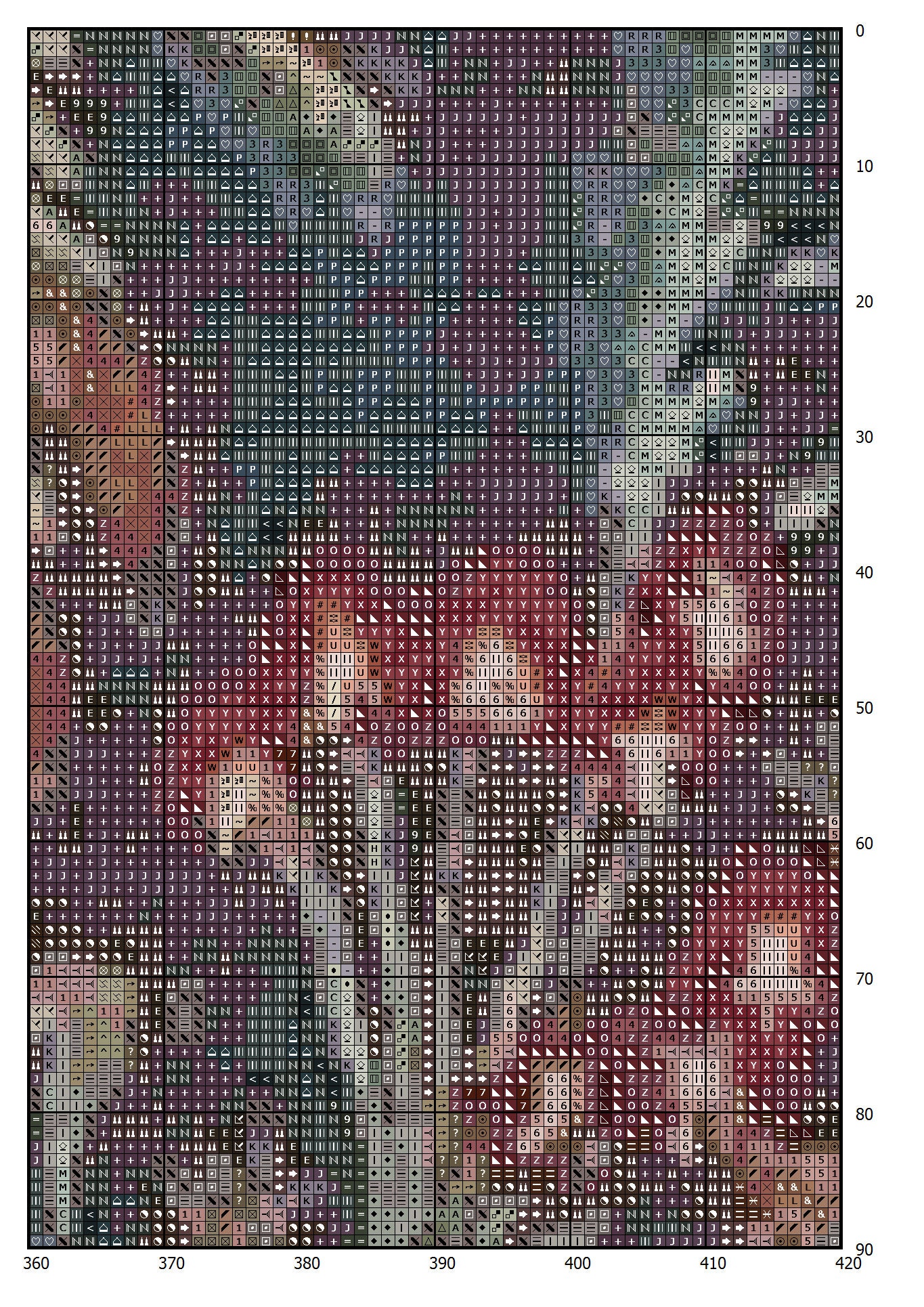
1. Color Map
2. Pattern with Black and White Symbols
3. Pattern with Colored Symbols
4. Type of Finished Embroidery
Please note, this is only a digital item – no physical item will be sent to you!
Digital products are presented in my store, please, after payment confirmation, the files will be sent within 24 hours!
Thank you so much, please write if there are any questions!
“Unicorn Hunting or Unicorn Tapestries (fr. La Chasse à la licorne) is a series of seven tapestries made in the Southern Netherlands around 1495-1505, and are currently kept in monasteries in New York. Perhaps they were designed in Paris and depict a group of nobles and hunters chasing a unicorn against an idealized French landscape. The tapestries were woven from wool, metal threads and silk. The bright colors that are visible to this day were obtained from dye plants: veld (yellow), madder (red) and vaad (blue).
Tapestries, first recorded in 1680 in the Parisian home of the Rochefoucauld family, were looted during the French Revolution. Found in a barn in the 1850s, they were hung in the Vertey family castle. Since then, they have been the subject of intense scholarly debate about the meaning of their iconography, the identity of the artists who created them, and the sequence in which they were to be hung. Although various theories have been put forward, nothing is yet known about their early history or origin, and their dramatic but contradictory narratives have inspired many interpretations, from chivalrous to Christological. Differences in size, style, and composition suggest that they come from several sets related by their subject matter, origin, and the mysterious AE monogram that appears on each. One of the panels, “The Mystical Capture of the Unicorn”, has been preserved in only two fragments.
James Rorimer suggested in 1942 that the tapestries were commissioned by Anne of Brittany in honor of her marriage to Louis XII, King of France in 1499. Rorimer interpreted the monogram A and E, which appears on each tapestry, as the first and last letters of Anna’s name. Margaret B. Freeman, however, rejected this interpretation in her 1976 monograph, a conclusion repeated by Adolf S. Cavallo in his 1998 paper. Tom Campbell, the former director of the Metropolitan Museum of Art, recently admitted that experts “still don’t know for whom and where [the tapestries] were made.” So far, scientists’ attempts to explain AE and other inscriptions, identify several heraldic symbols, and coherently explain mysterious narratives have met with limited success.”


Reviews
There are no reviews yet.